India's festive-season car numbers offer a lesson in how to read growth: a fast-growing category does not mean the whole market is expanding.
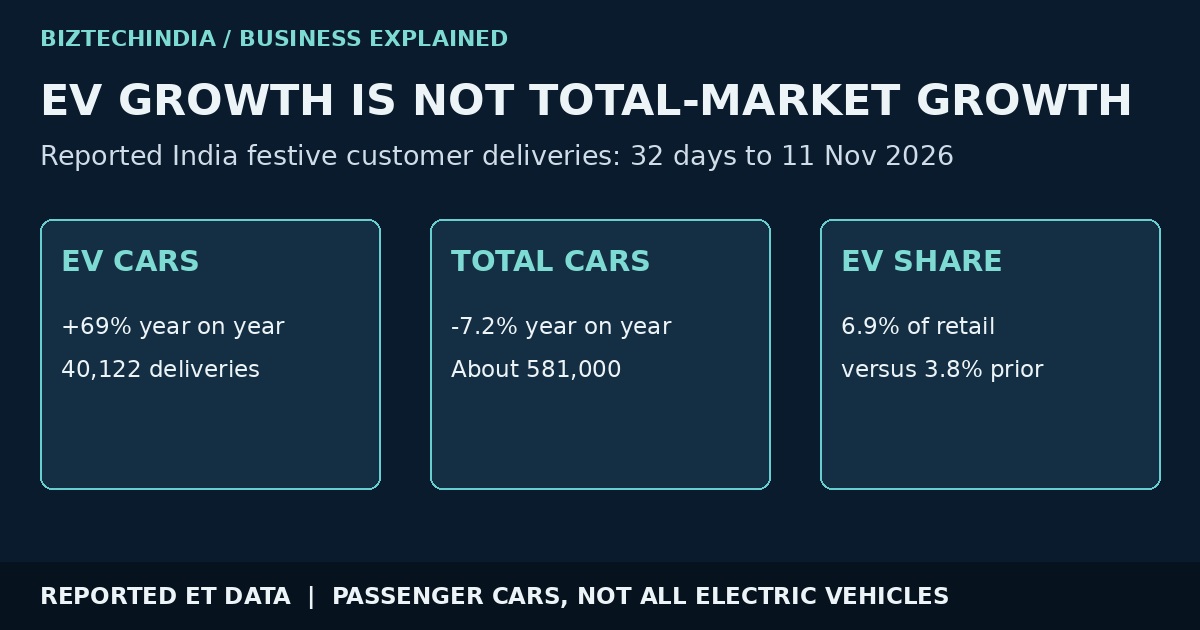
The Economic Times reported that electric-car customer deliveries rose 69% year on year to 40,122 during a 32-day festive period ending November 11, citing Dynamics data. Over the same window, total passenger-vehicle deliveries fell 7.2% to about 581,000.
Both statements can be true. Electric cars are growing from a much smaller base, while petrol, diesel and CNG vehicles still account for most purchases.
Growth rate is not market share
The report put electric cars at 6.9% of passenger-vehicle retail sales in the period, compared with 3.8% a year earlier.
That is a substantial change in the mix of purchases. It does not mean electric cars outsold combustion vehicles in absolute numbers. A percentage increase describes the change from an earlier base; market share describes a category's size within the total.
Confusing the two can turn a useful adoption story into an exaggerated claim that a market has already changed hands.
Customer deliveries are not factory dispatches
There is another distinction behind apparently conflicting headlines.
A manufacturer can ship a vehicle to a dealer before a customer takes delivery. Factory dispatches therefore measure a different stage of the sales process from retail deliveries.
The festive-period figures in this report concern customers receiving cars. They should not be compared directly with an October factory-dispatch figure or treated as a full-year measure. The measurement window and the point in the distribution chain both need to match.
A festive comparison also has its own base effects. The Economic Times noted that the previous year's buying period benefited from GST rate cuts. That context limits what a single seasonal comparison can say about the underlying pace of demand.
What the figures do, and do not, establish
The narrow conclusion is useful: electric cars gained share during the reported retail window even as total passenger-vehicle deliveries declined.
It is not a forecast that the same growth rate will continue. It does not establish an automaker's profitability, erase charging and affordability concerns or describe all electric vehicles. Electric two-wheelers, buses and commercial vehicles are outside this passenger-car comparison.
For anyone following the transition, the next checks are whether the gain continues outside the festive period, whether supply meets demand, and whether customer deliveries translate into sustainable business results. Adoption, market share and earnings are connected, but they are different questions.
Educational business analysis only. The figures are attributed reported data for a defined period, not a live vehicle-sales dashboard or investment recommendation.
Image: original explanatory diagram.