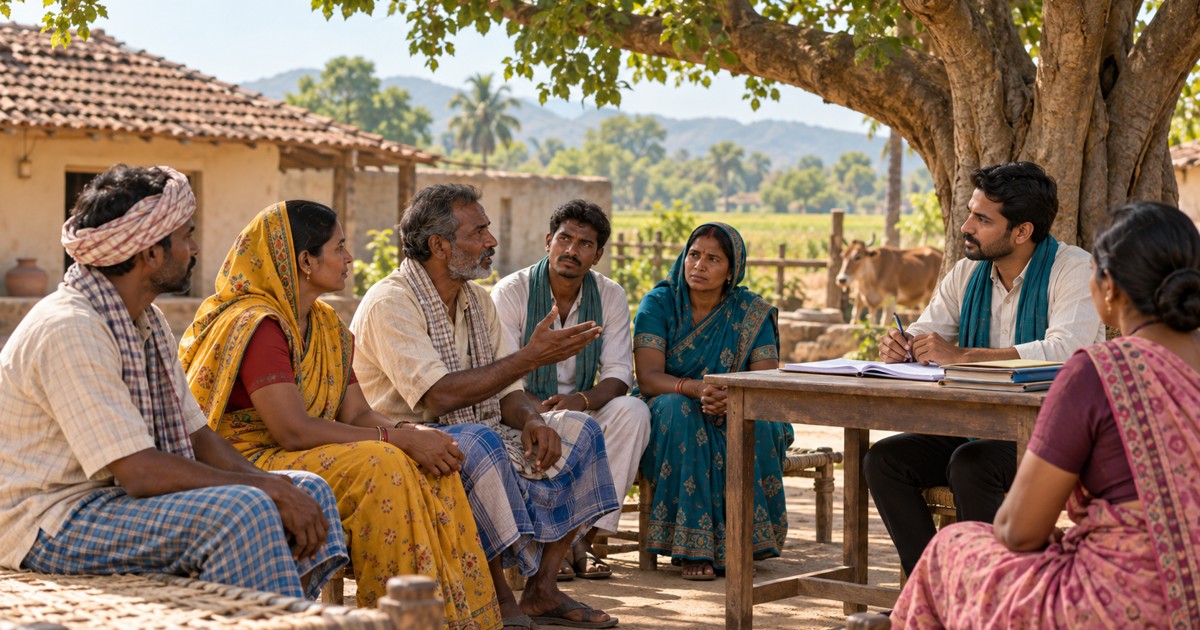
A rural employment guarantee needs more than a statement of entitlements. Workers also need a way to question missing work records, delayed wages or treatment that denies them those entitlements. New guidelines announced by the Ministry of Rural Development on November 18, 2026 focus on that accountability layer under VB-G RAM G.
The ministry’s release describes a district-level ombudsperson, a digital platform for complaint records and follow-up, and regular participation in community hearings. The announcement sets out a framework. It does not establish that every district already has an appointee, that the platform is available everywhere or that wage-payment problems have been solved.
What the guidelines cover
The ministry names the programme as Viksit Bharat – Guarantee for Rozgar and Ajeevika Mission (Gramin), or VB-G RAM G, under the Act of 2025. Its new guidelines concern ombudspersons and the Appellate Authority framework.
According to the release, the district-level ombudsperson is intended to address complaints involving job cards, employment, wage payments, compensation for delays, worksite facilities, muster rolls and denial of statutory entitlements.
The scope also includes discrimination, harassment and violations of workers’ rights, including those of women and vulnerable groups. That makes this more than a mechanism for checking a payment entry: the announced coverage includes how workers are treated and whether they can access what the programme provides.
What a complaint record should make visible
The planned digital platform is intended to support online complaint registration and tracking, recording of proceedings, uploading of awards and monitoring of action taken. The ministry also describes geo-tagged and time-stamped photographs from field visits as part of the documentation.
Those functions address different stages of accountability. Registering a complaint creates a record that it was raised. Recording proceedings documents its consideration. An award and an action-taken record are further steps. None should be mistaken for all the others.
A tracking entry, for example, would not by itself establish that a worker received a delayed payment. The delivery question is whether the complaint led to the appropriate action, and whether that action can be checked.
Why community hearings remain part of the design
Under the announced guidelines, ombudspersons will attend at least three social-audit public hearings or Gram Sabhas each month. The ministry presents these meetings as an opportunity to hear concerns directly and support follow-up.
This community-facing element sits alongside individual complaints and digital records. The release says findings from social audits and community feedback can help identify discrepancies and support corrective action under the prescribed procedures.
The point is not that a meeting count proves effective grievance handling. Attendance can create opportunities to hear problems, but the outcomes still need to show what was raised, what was decided and what happened next.
The delivery questions that remain
For readers tracking the Viksit Bharat development agenda, the distinction is between announcing an accountability framework and showing that rural workers can use it in practice.
Evidence of delivery would include functioning district-level arrangements, accessible complaint channels, records that can be followed and action that addresses the underlying grievance. Those are tests to apply to implementation, not achievements that this announcement alone proves.
The ministry also says eligibility for ombudspersons has been broadened to include experience in fields such as rural development, administration, law, academics, social work and management. It reports changes to tenure and remuneration provisions, but the release does not give the detailed terms needed for an appointment guide.
What this article does not tell you to do
This is an explanation of the announced framework, not instructions for filing a case. The release does not provide the local contact, filing deadline or full appeal procedure needed to tell a particular worker where and when to submit a complaint.
It would therefore be wrong to invent a universal portal address, promise a response within a fixed number of days or describe an appeal route beyond what the announcement establishes.
The meaningful test now is whether the system can turn a worker’s complaint into a traceable decision and appropriate follow-through. A new digital record and a hearing requirement can support that work. Their existence on paper is not the same as a grievance being put right.
Programme details in this explainer are attributed to the Ministry of Rural Development’s November 18, 2026 release, posted at 10:29 AM IST. It does not confirm district-level appointments, platform availability or resolved complaints.
From our network: Visit Stockmarket360 for separate company-news and market explainers. It is not a complaint-filing or government-benefits service.