India’s installed solar capacity reached about 175 GW by October 31, 2026, compared with 2.82 GW in 2014, according to a government backgrounder published on November 17. That is a substantial expansion of the country’s solar generating equipment. It is not a statement that solar supplies 175 GW at every hour of the day.
The distinction matters when assessing India’s development ambitions. Building capacity is a milestone. Turning that capacity into useful electricity, at the time and place people need it, is a separate test.
What the 175 GW figure measures
The government figure is a dated installed-capacity total, expressed in gigawatts. It describes the scale of the solar equipment installed, rather than the electricity actually generated over a month or year.
Actual output changes with sunlight, weather and time of day. Solar production falls as daylight fades, while electricity demand can continue into the evening. A capacity milestone therefore cannot, on its own, establish round-the-clock supply, the share of demand met in a particular month or the reliability experienced by a household.
This does not diminish the scale of deployment. It identifies the next questions: how much energy the equipment produces, whether the grid can carry it to users, and what resources can support demand when solar output is low.
A sanctioned floating-solar programme, not 5 GW already built
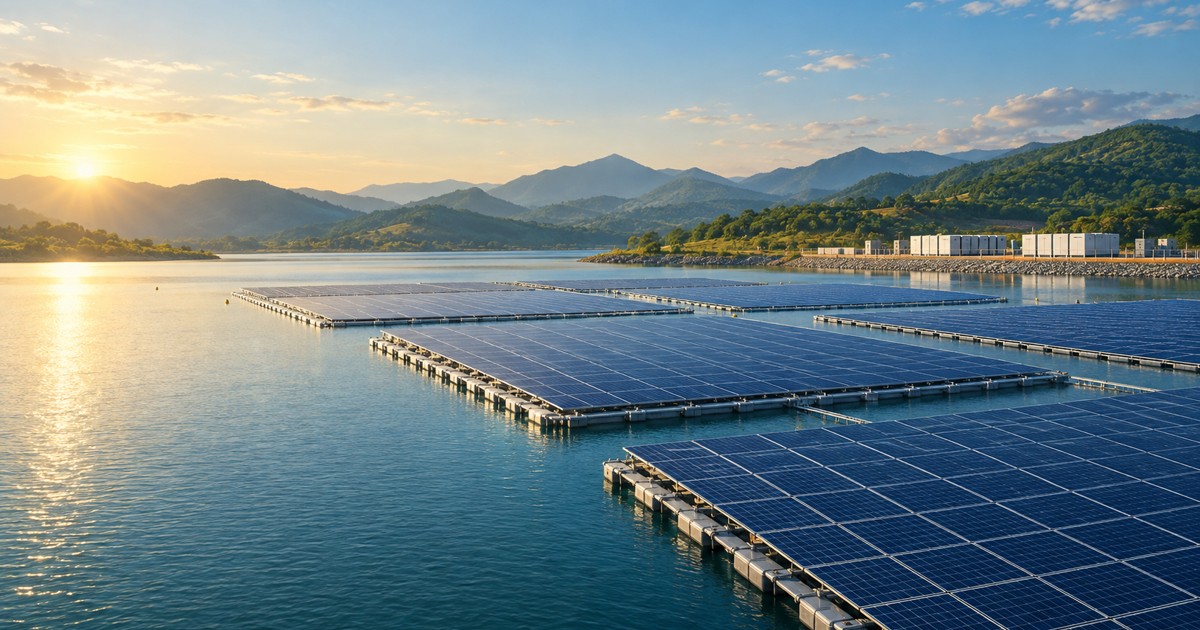
The same government backgrounder says the Pradhan Mantri Surya Sarovar Yojana was approved on July 31, 2026. It gives the programme an outlay of Rs 5,070 crore and an implementation period from FY2026-27 to FY2030-31.
The stated aim is to support 5,000 MW of floating solar photovoltaic projects with co-located energy storage. The document specifies storage of at least two hours, totalling 10,000 MWh.
Those are approved programme targets and an allocated outlay. They should not be reported as 5,000 MW already commissioned, 10,000 MWh already operational or the entire outlay already spent.
The government’s stated approach is to use reservoirs and industrial ponds, reducing pressure on land needed for other uses. That is the programme’s rationale, not proof that every proposed site is ready or that each project has completed its technical and local approvals.
Why the storage part deserves attention
Pairing solar generation with storage addresses a timing problem. Energy can be stored when generation is available and released later, including after sunset. Storage can also help manage changes in solar output.
But a storage target is not a guarantee that every connected consumer will receive uninterrupted power. Delivery depends on the systems actually being commissioned and operated, alongside transmission, distribution and other resources on the grid.
The programme’s minimum two-hour specification also should not be stretched into a claim of unlimited overnight backup. It describes a planned storage duration, not a promise that the solar system can supply its full output for an entire night.
How to assess the Viksit Bharat contribution
For readers tracking the Viksit Bharat development agenda, the useful approach is to keep achievements and next steps in separate columns. The near-175 GW figure is the government’s reported installed-capacity milestone as of October 31. The floating-solar programme is an approved route for further deployment with storage.
Evidence of delivery would include commissioned project capacity, operating storage, electricity supplied and the ability to serve demand when it occurs. Those outcomes should be measured rather than assumed from an announcement.
Likewise, national growth does not establish that every household has a solar installation, that every consumer’s bill has fallen or that power interruptions have ended. Local access and service quality remain different questions from a national installed-capacity total.
The bottom line
India’s solar expansion is a measurable infrastructure story, based here on the government’s dated figures. The next phase is also an integration story: connecting new generation with storage and the electricity network so installed equipment becomes useful supply.
Recognising the milestone while testing those delivery questions gives a clearer picture than treating either an installed-capacity total or a sanctioned scheme as a finished energy transition.
All India capacity figures, programme dates, targets and outlays in this article are attributed to the government’s November 17, 2026 backgrounder. This is an informational explanation, not an investment recommendation or a promise of household savings.
From our network: For separate company announcements and market explainers, visit Stockmarket360. A national capacity milestone alone is not a reason to buy or sell a company’s shares.